
BC Place Vancouver: All Whites’ World Cup Home
 Available in US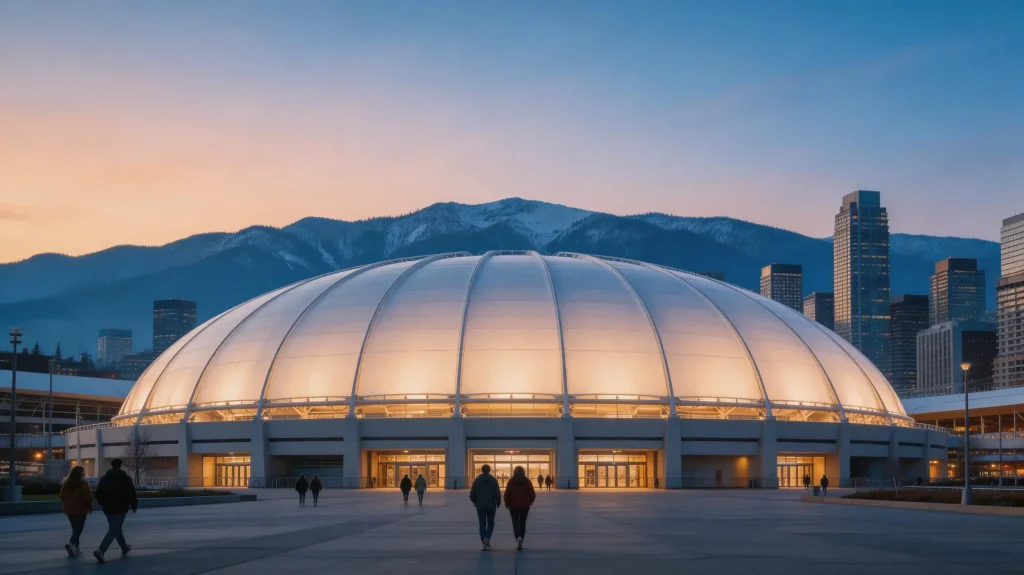
Table of Contents
Two of our three World Cup matches will be played under the distinctive white dome that defines Vancouver’s waterfront skyline. BC Place becomes the closest thing New Zealand has to home advantage at World Cup 2026 — a venue where the Pacific Northwest’s substantial Kiwi diaspora can gather in numbers that might actually register against the crowd noise. I first visited BC Place for a Whitecaps match in 2019, struck by how the retractable roof creates an atmosphere that amplifies crowd energy in ways open-air stadiums cannot replicate. The All Whites will face Egypt and Belgium here, making this Canadian venue the backdrop for our World Cup destiny.
BC Place World Cup matches represent the stadium’s most significant football events since its 1983 opening. The venue has hosted Grey Cup finals, Olympic ceremonies, and countless concerts beneath its cable-supported roof, but FIFA’s tournament brings global attention that transforms regional landmark into international stage. For New Zealand supporters planning the journey north, understanding BC Place — its location, atmosphere, and the city surrounding it — matters as much as understanding the opponents we’ll face on its artificial surface.
About BC Place: Vancouver’s Dome
The original BC Place opened with an air-supported roof that collapsed under heavy snow in 2007, forcing a $514 million renovation that installed the world’s largest cable-supported retractable roof. That engineering marvel now spans 55,000 seats — reduced to approximately 45,000 for World Cup configuration with FIFA’s field-level seating requirements. The stadium sits in the False Creek area, walking distance from downtown Vancouver, with the distinctive white membrane creating a beacon visible across the harbour and from the mountains that frame the city.
Playing surface presents the most significant tactical consideration for World Cup matches. BC Place uses FieldTurf artificial grass — a FIFA-certified surface that nonetheless plays differently from natural pitches. Ball roll speeds increase on artificial turf, bounces behave unpredictably in ways natural grass cushions, and physical demands on players’ joints accumulate faster than on softer surfaces. Teams accustomed to natural European pitches may require adjustment periods; the All Whites’ domestic experience with various surface types potentially offers familiarity advantages.
The retractable roof creates atmospheric conditions that differentiate BC Place from open-air World Cup venues. Sound reflects off the enclosed dome, amplifying crowd noise in ways that can intimidate opponents and energise the home side. When the roof closes — likely for evening matches and inclement weather — the atmosphere intensifies further. These acoustic properties mean a 45,000 crowd at BC Place can sound like 60,000 at an open stadium, a factor that could benefit New Zealand if the Kiwi diaspora shows up in force.
Stadium facilities meet FIFA’s highest standards following upgrades specifically designed for World Cup hosting. The wide concourses handle crowd flow efficiently, food and beverage options extend beyond typical stadium offerings, and accessibility provisions exceed regulatory requirements. Transportation links to SkyTrain rapid transit position BC Place among the tournament’s most easily accessible venues — fans can reach downtown Vancouver accommodation within minutes of final whistles, facilitating post-match celebrations or commiserations.
World Cup 2026 Matches at BC Place
BC Place hosts nine World Cup matches across group stages and knockout rounds. The venue’s assignment reflects FIFA’s confidence in Vancouver’s hosting capabilities and the stadium’s premium facilities. Group stage fixtures span multiple groups, bringing varied fan populations to Vancouver’s waterfront before knockout rounds raise stakes and concentrate attention. The final match scheduled at BC Place is a Round of 32 fixture, meaning the stadium’s World Cup involvement concludes before quarter-final stages.
The nine-match allocation positions BC Place as a secondary hub venue behind American mega-stadiums but ahead of smaller Canadian and Mexican facilities. Vancouver’s cultural diversity — the city’s Asian-Pacific population creates potential supporter bases for multiple competing nations — makes it an appealing destination for FIFA’s commercial considerations. The matches scheduled here represent billions in economic impact for British Columbia, justifying public investment in stadium upgrades and tournament infrastructure.
Match scheduling at BC Place favours evening local kickoffs that translate to afternoon NZST times. The typical 6pm or 8pm Pacific Time starts create viewing windows between 1:00 PM and 3:00 PM in New Zealand — perfectly timed for workplace distractions, pub gatherings, and engaged watching that overnight fixtures would prevent. This scheduling coincidence makes BC Place matches particularly accessible for New Zealand supporters who cannot travel to Vancouver but want to follow All Whites fortunes live.
All Whites at BC Place: Match Schedule
New Zealand faces Egypt at BC Place on June 22, with kickoff at 6pm Pacific translating to 1:00 PM NZST the following day. This second group match follows our Iran opener in Los Angeles, with five days’ rest and a domestic Canadian flight separating fixtures. The Egypt encounter likely determines our advancement prospects — a result here, combined with whatever happened against Iran, establishes whether the Belgium match carries mathematical significance or becomes ceremonial.
The Belgium fixture on June 27 brings the group’s favourites to Vancouver for a 8pm local kickoff — 3:00 PM NZST. This match closes Group G action, with Belgium potentially already qualified and rotating key players. The later kickoff suggests FIFA anticipates this match having group-deciding implications; the scheduling positions it after results from other groups create clarity about third-place qualification scenarios. Whether facing full-strength Belgian brilliance or second-string rotation, the All Whites conclude their group campaign where it will have begun for most — beneath BC Place’s dome.
The five-day gap between New Zealand’s two BC Place matches allows proper preparation without travel disruption. The team can establish base accommodation in Vancouver, train on local facilities, and build rhythm that single-venue assignments permit. This stability contrasts with teams playing across multiple cities who face constant relocation. For All Whites supporters attending both matches, the extended Vancouver stay enables exploration of a city that welcomes visitors with warmth matching its stunning natural setting.
Vancouver: A Kiwi-Friendly City
The Pacific Northwest shares more with New Zealand than geography suggests. Vancouver’s climate — mild, frequently drizzly, dramatically mountainous — feels familiar to anyone from Wellington or the South Island’s west coast. The outdoor culture that defines Vancouver life echoes Kiwi values: hiking trails beginning minutes from downtown, skiing within day-trip distance, and waterfront activities that make the most of Pacific Northwest summers. Arriving in Vancouver produces less cultural adjustment than most World Cup destinations demand.
The Kiwi diaspora in Vancouver and broader British Columbia numbers in the tens of thousands — exact figures vary, but Pacific Northwest tech industry growth and outdoor lifestyle appeal have drawn New Zealanders throughout the 2010s and 2020s. This established community provides foundation for World Cup support that exceeds what our population should generate. Social media groups already coordinate watch parties and match travel; the community infrastructure exists to make New Zealand’s presence felt at BC Place despite travelling 12,000 kilometres from home.
Accommodation options near BC Place range from downtown luxury hotels to Airbnb rentals in surrounding neighbourhoods like Yaletown, Gastown, and Mount Pleasant. Booking early proves essential — World Cup demand will absorb Vancouver’s considerable hotel capacity months before tournament kickoff. Those flexible on location should consider North Vancouver or Burnaby alternatives connected by SkyTrain; the 20-30 minute transit times save hundreds in nightly rates while maintaining easy stadium access.
Vancouver’s food scene rivals any World Cup host city. The Asian influences — Chinese, Japanese, Vietnamese, Korean — produce diversity that Auckland’s dining scene approaches but cannot quite match. Seafood from local waters appears on menus throughout the city, while craft brewing and coffee culture create gathering spots perfect for pre-match socialising. The combination of natural beauty, cultural diversity, and culinary excellence makes extended Vancouver stays genuinely enjoyable rather than merely necessary for match attendance.
Getting to BC Place: Kiwi Travel Tips
Air New Zealand operates direct Auckland-Vancouver flights that simplify the journey considerably. The 13-hour flight crosses the Pacific overnight, arriving in Vancouver morning local time — jet lag management that favours westbound travel. Alternative routing through Los Angeles or San Francisco adds complexity without significant cost savings; the direct option justifies any premium for time efficiency and reduced connection stress.
Arriving in Vancouver International Airport positions you 25 minutes from downtown via Canada Line SkyTrain. The airport station sits within the terminal, requiring only escalator descent and fare purchase to begin the journey toward BC Place. Avoid taxi queues — the train proves faster, cheaper, and scenic as it crosses the Fraser River with mountain backdrops that preview Vancouver’s visual appeal. Stadium Station delivers you directly to BC Place’s eastern entrance, eliminating any navigation uncertainty.
Currency considerations favour preparation. Canadian dollars can be obtained from NZ banks before departure or ATMs upon arrival; the exchange rate typically sits around 0.85 CAD per NZD, making Canadian prices feel roughly equivalent to New Zealand’s. Credit card acceptance is universal in Vancouver — Visa and Mastercard work everywhere, while Amex and EFTPOS have limitations worth noting. Tipping culture applies (15-20% at restaurants), a practice that catches Kiwis unaware if they’ve not travelled North America previously.
Match tickets for BC Place fixtures should be secured through official FIFA channels or legitimate resale platforms. Avoid ticket scalpers — Canadian consumer protection laws offer limited recourse if purchased tickets prove invalid. The FIFA ticketing portal provides face-value access with delivery guarantees that protect against fraud. For those unsuccessful in initial ballot rounds, patience often rewards: ticket returns closer to match dates create legitimate purchasing opportunities at face value.
Our Canadian Home for World Cup 2026
BC Place represents more than a venue for New Zealand’s World Cup campaign — it’s the stadium where our tournament will likely be decided. The Egypt match carries stakes that could define our entire experience; the Belgium fixture provides either meaningful competition or celebratory farewell depending on group mathematics. Two matches, one venue, the dome that becomes synonymous with All Whites at World Cup 2026.
For supporters making the journey, Vancouver offers World Cup experience surrounded by natural beauty and cultural richness that few tournament cities can match. The Kiwi community there ensures you won’t feel alone regardless of match outcomes. For those watching from home, the afternoon NZST scheduling permits engagement that midnight fixtures would deny. BC Place becomes our collective focus across 12,000 kilometres — the Canadian dome where New Zealand football writes its next chapter.
