
Football Betting Glossary: Terms Every Kiwi Punter Should Know
 Available in US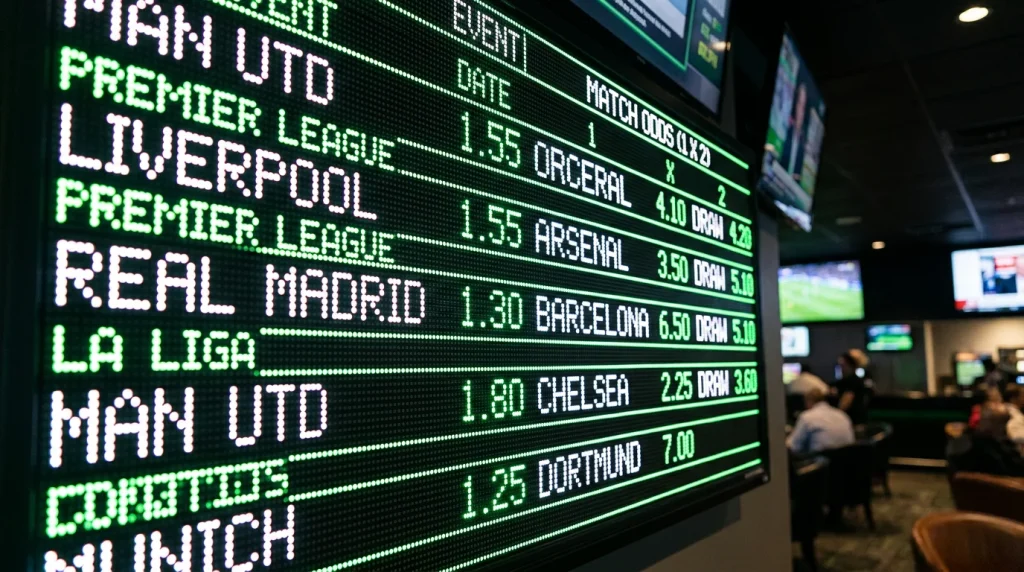
Table of Contents
My first serious bet came unstuck not because I picked wrong, but because I misunderstood what I was actually betting on. I thought “draw no bet” meant I won if the match drew. Cost me $50 and a valuable lesson in the importance of knowing exactly what terms mean before money changes hands. This betting glossary NZ punters can reference covers every term you’ll encounter on TAB NZ’s football markets — from basic concepts that everyone should know to specialist terminology that separates casual punters from those who understand what they’re actually backing.
The World Cup 2026 will flood betting platforms with markets using vocabulary that assumes familiarity. Accumulators, Asian handicaps, expected goals — these terms appear without explanation because bookmakers expect you to know. This glossary provides that foundation, organised alphabetically for quick reference and explained in plain language that doesn’t require gambling industry fluency. Bookmark this page; you’ll return to it throughout the tournament when unfamiliar terminology appears in markets you want to understand before backing.
A-D: Accumulator to Draw No Bet
Accumulator (Acca): A single bet combining multiple selections where all legs must win for any return. The appeal lies in multiplied odds — backing three teams at 2.00 each creates combined odds of 8.00 — but the compounding probability of loss makes accumulators difficult to win consistently. Popular for small stakes seeking large returns, though mathematically the bookmaker’s edge multiplies with each added leg. TAB NZ calls these “multi bets” in their platform terminology.
All-In Betting: Markets where your stake is committed regardless of whether a participant withdraws. In outright World Cup winner markets, if your selection pulls out before the tournament, you typically lose your stake. This contrasts with “all-in, run or not” provisions in some markets. Check specific market rules before betting on outrights where withdrawal is possible.
Asian Handicap: A betting market that eliminates the draw by applying goal advantages or deficits. If New Zealand receives +1.5 against Belgium, they need only avoid losing by two or more goals to win the bet. Half-goal handicaps cannot result in draws; whole-goal handicaps (like +1) push (return stake) if the match lands exactly on the line. Asian handicaps originated in Asian markets to create 50-50 propositions from mismatched fixtures.
Bankroll: The total amount of money set aside specifically for betting. Proper bankroll management typically involves staking 1-3% per bet, allowing sustained activity through losing runs without depleting funds entirely. Your World Cup bankroll should represent money you can afford to lose completely without affecting daily life.
Bet Builder: A feature allowing multiple selections from a single match to be combined into one bet. Backing New Zealand to win, under 2.5 goals, and Chris Wood to score creates a same-game parlay with enhanced odds reflecting the combined difficulty. TAB NZ offers bet builder functionality for major matches.
Both Teams to Score (BTTS): A market betting on whether each team finds the net during regulation time, regardless of final result. A 1-1 draw settles as “yes”; a 3-0 win settles as “no.” Popular for matches where attacking intent from both sides seems likely, though tournament football often produces cautious approaches that suppress scoring.
Cash Out: An option to settle bets before the event concludes, accepting reduced returns in exchange for eliminating remaining risk. If your accumulator has won three of four legs, cashing out locks in partial profit rather than risking total loss on the final selection. Cash out values fluctuate based on live match state and remaining selections.
Correct Score: Predicting the exact final scoreline of a match. High-risk, high-reward market where 1-0, 2-1, and 1-1 typically offer shorter odds than unusual scores like 4-3. The difficulty of precise prediction creates attractive prices but low strike rates.
Dead Heat: When two or more selections tie in a market designed for single winners. In top scorer betting, if two players finish level on goals, bets on each are settled at half the original odds. Dead heat rules vary by bookmaker; check terms for specific market treatments.
Decimal Odds: The format used in New Zealand showing total return per unit staked. Odds of 2.50 mean a $10 bet returns $25 total ($15 profit plus $10 stake). Convert to implied probability by dividing 1 by the decimal: 1 ÷ 2.50 = 0.40 or 40% implied probability.
Double Chance: A market covering two of three possible outcomes in match betting. “New Zealand or Draw” pays if New Zealand wins or the match draws; only Belgium victory loses this bet. The safety of covering two outcomes produces shorter odds than backing either result individually.
Draw No Bet (DNB): A market that refunds stakes if the match draws, paying only on outright winner. Backing New Zealand DNB against Egypt wins if New Zealand wins and returns stake if the match draws; only Egypt victory loses. Essentially Asian handicap 0 by another name.
E-L: Each Way to Live Betting
Each Way: A bet consisting of two equal stakes — one on selection to win outright, another on selection to place within specified positions. In top scorer betting with each way terms of 1/4 odds for places 1-3, backing a player at 20.00 each way costs $20 total ($10 win, $10 place). If they finish second, the win portion loses but the place portion pays at 5.00 (20.00 × 1/4).
Edge: The statistical advantage a bettor believes they possess over the bookmaker’s odds. If you assess New Zealand’s advancement probability at 50% but odds imply 42%, your perceived edge is 8 percentage points. Profitable long-term betting requires consistently finding positive edge situations.
Expected Goals (xG): A statistical measure of chance quality based on historical conversion rates from similar positions. A shot from the penalty spot averages approximately 0.76 xG; a long-range effort might be 0.05 xG. Some betting analysis uses xG to identify teams outperforming or underperforming underlying chance creation.
First Goalscorer: Betting on which player opens the scoring in a match. Offers higher odds than anytime goalscorer because it requires both scoring and scoring first. Voided if your selection doesn’t start the match; check rules regarding substitutes who come on and subsequently score.
Fixed Odds: Betting where the odds are locked at the time of bet placement regardless of subsequent market movement. Your New Zealand bet at 2.38 pays at 2.38 even if odds drift to 2.60 before kickoff. Standard across modern sports betting platforms including TAB NZ.
Full Time Result (FTR): Another term for match result or 1X2 betting, predicting the outcome after 90 minutes plus injury time. Excludes extra time and penalties in knockout matches unless specifically stated otherwise.
Goal Line: Over/under betting on total goals with the standard line typically set at 2.5. Over 2.5 requires three or more goals; under 2.5 requires two or fewer. Alternative lines at 1.5, 3.5, and beyond cater to varying expectations about match scoring.
Handicap Betting: Markets applying virtual advantages or deficits to level the competitive field. If New Zealand receives a +2 handicap against Belgium, two goals are added to their final score for betting purposes. A 2-0 Belgium win becomes a draw under this handicap; anything less than a two-goal Belgium margin means New Zealand covers the spread.
Implied Probability: The percentage chance of an outcome suggested by its odds. Calculate by dividing 1 by decimal odds: 2.50 odds imply 40% probability (1 ÷ 2.50). The sum of implied probabilities across a market exceeds 100% by the bookmaker’s margin.
In-Play Betting (Live Betting): Wagering on events while they’re occurring, with odds updating based on match state. A goal changes match result odds immediately; time elapsed affects total goals markets. Requires quick decision-making and understanding of how live odds movements reflect match dynamics.
Juice (Vig/Vigorish): The bookmaker’s built-in profit margin on markets. In a true 50-50 market, both outcomes would be priced at 2.00; instead, they might be 1.91 each, creating overround that guarantees bookmaker profit regardless of outcome. Comparing juice across bookmakers helps identify better value.
Lay Betting: Betting against an outcome rather than for it — available on betting exchanges but not traditional bookmakers like TAB NZ. Laying New Zealand means you win if New Zealand doesn’t win (draw or opposition victory). The layer essentially acts as bookmaker, accepting bets from those backing the selection.
Line Shopping: Comparing odds across multiple bookmakers to find the best price for your selection. New Zealand might be 2.38 at TAB NZ and 2.45 elsewhere; taking the 2.45 improves returns on identical predictions. Less relevant in New Zealand’s regulated market where TAB NZ dominates.
Live Betting: See In-Play Betting.
M-P: Match Odds to Punt
Match Odds: The standard market for predicting match outcome — home win, draw, or away win (1X2). World Cup matches on neutral ground don’t have true home teams, but the first-listed side takes the “1” designation. The most liquid market for any fixture, attracting the majority of betting volume.
Margin: The bookmaker’s profit percentage built into market odds. Calculate by converting all odds to implied probabilities and summing: if they total 105%, the margin is 5%. Lower margins indicate better value for bettors; major match markets typically carry lower margins than obscure fixtures.
Moneyline: American term for match winner betting, sometimes appearing in international markets. In American odds format, -150 means bet $150 to win $100 on favourites; +200 means bet $100 to win $200 on underdogs. Convert to decimal odds for easier comparison with NZ market pricing.
Multi Bet: TAB NZ’s terminology for accumulators or parlays. Multiple selections combined into single wager where all legs must win. Same mathematical properties as accumulators — multiplied odds but compounded probability of loss.
Odds Movement: Changes in market prices reflecting betting volume and information updates. If New Zealand opens at 2.50 and moves to 2.30, money has backed them, shortening their price. Tracking movement reveals where public and sharp money flows before fixtures.
Outright Betting: Markets on tournament-long outcomes rather than individual matches. World Cup winner, top scorer, team to reach final — these settle only when the tournament concludes. Longer timeframes create uncertainty that inflates odds but also increases variance.
Over/Under: Betting on whether a numerical outcome exceeds or falls below a specified line. Over 2.5 goals requires three or more; under 2.5 requires two or fewer. Applies to goals, corners, cards, and various other countable match events.
Overround: The total implied probability across a market, always exceeding 100% by the bookmaker’s margin. A market with 106% overround has 6% built-in profit for the bookmaker. Lower overround indicates better value for bettors.
Parlay: American term for accumulator or multi bet. Multiple selections combined where all must win for any return. The term appears in international betting content and on some platforms targeting US audiences.
Place Betting: Backing a selection to finish within specified positions rather than winning outright. In top scorer markets, place terms might pay for top 3 finishes. Returns are calculated at reduced odds — typically 1/4 or 1/5 of win odds depending on market terms.
Price: Another word for odds — what the bookmaker offers for each selection. “The price on New Zealand to advance is 2.38” means those are the current odds available.
Prop Bet (Proposition Bet): Wagers on specific occurrences within an event rather than the overall outcome. “Chris Wood to receive a card” or “First goal to be a header” are prop bets. Often carry higher margins due to lower liquidity and predictive difficulty.
Push: When a bet neither wins nor loses, typically because the result lands exactly on the line. Asian handicap +1 pushes (returns stake) if the team loses by exactly one goal. Also called a “tie” in some market contexts.
Punt: Casual term for placing a bet, commonly used in New Zealand and Australian betting vernacular. “Having a punt on the All Whites” means betting on New Zealand. A “punter” is someone who bets.
Q-Z: Qualifying Bet to Yankee
Qualifying Bet: A wager that meets specific criteria for promotional offers — minimum odds, minimum stake, or particular market types. Free bet promotions often require qualifying bets before bonus funds are released. Read terms carefully; qualifying criteria can be restrictive.
Return: The total amount received from a winning bet, including original stake. Decimal odds of 2.50 with $10 stake returns $25 total — $15 profit plus $10 stake. Distinguish from profit, which excludes the returned stake.
Rollover: The requirement to wager bonus funds or promotional amounts a specified number of times before withdrawal. 5x rollover on a $50 bonus means placing $250 in qualifying bets before bonus winnings become withdrawable. Standard in promotional terms across the industry.
Sharp: A sophisticated bettor whose wagers are respected by bookmakers as market-moving information rather than recreational action. Sharp money moving on New Zealand might cause their odds to shorten as bookmakers adjust to informed opinion. Contrasts with “square” or recreational money.
Single: A bet on one selection only, the simplest form of wagering. Your $10 on New Zealand to beat Iran is a single bet. Contrasts with multis/accumulators that combine multiple selections.
Spread Betting: Wagering on whether an outcome exceeds or falls below a bookmaker’s prediction, with returns proportional to accuracy. If the spread on New Zealand’s goals is 0.5 and they score twice, buying the spread returns profit based on the 1.5-goal difference. More common in UK markets than Australasian betting.
Stake: The amount of money wagered on a bet. Your $20 stake represents the capital at risk, returned with profit on winning bets and lost entirely on losing bets. Proper staking involves consistent percentage allocation from total bankroll.
Steam: Rapid, significant odds movement caused by heavy betting volume on one side. If New Zealand “steams in” from 3.00 to 2.50, substantial money has backed them quickly. Can indicate sharp action or coordinated recreational volume.
Straight Bet: American term for a single wager on one outcome. Equivalent to a single bet in NZ terminology.
System Bet: A combination bet that covers multiple accumulator combinations within a selection set. A Trixie on three selections includes three doubles and one treble — four bets total from three picks. Provides returns even when not all selections win, unlike standard accumulators.
Trixie: A system bet comprising four wagers across three selections — three doubles and one treble. Two of three selections winning produces return from the successful double. Reduces variance compared to straight treble while maintaining multiplied odds potential.
Under/Over: See Over/Under.
Value: A bet where the odds offered exceed the true probability of the outcome. If you assess New Zealand’s advancement probability at 50% but odds imply 42%, backing them represents value. Finding consistent value is the foundation of profitable betting.
Void Bet: A wager cancelled and stake returned, typically due to rule violations, participant withdrawal, or abandoned events. If your first goalscorer pick doesn’t start the match, the bet voids and stake returns. Market rules specify voiding conditions.
Wager: Formal term for a bet — the money placed on a predicted outcome. “Place your wagers” means submit your bets.
Yankee: A system bet comprising eleven wagers across four selections — six doubles, four trebles, and one fourfold accumulator. Two winning selections guarantee return; complexity suits bettors confident in multiple picks but wanting insurance against single-selection failure.
Kiwi Terms: TAB-Specific Lingo
TAB NZ’s platform uses terminology that sometimes differs from international betting vocabulary. Understanding these New Zealand-specific terms ensures you navigate the platform confidently during World Cup betting.
Flexi Betting: TAB NZ’s option for proportional bet sizing on accumulators. Instead of requiring $1 minimum per combination, flexi betting allows smaller stakes across multiple combinations — useful for large system bets where full coverage would require prohibitive outlay.
Pick Your Own (PYO): TAB NZ’s bet builder feature allowing same-game multi combinations. Select multiple outcomes from a single fixture — match result, goalscorers, cards — and combine into one bet with aggregated odds.
Top Fluc: The highest fluctuation (highest odds available) for a selection during specified periods. TAB NZ’s top fluc guarantee pays winning fixed-odds bets at the better of the fixed price taken or the top price achieved. Less relevant to football than racing but worth understanding across TAB’s offerings.
Refer to the World Cup betting guide for detailed explanations of how these terms apply specifically to tournament betting strategy. The glossary provides vocabulary foundation; practical application comes through market engagement where these concepts translate to actual betting decisions.
Master the Language
Betting terminology creates barriers that favour those who invest time understanding what they’re actually backing. Every term in this glossary represents a concept that will appear in World Cup markets — from the straightforward match odds to complex system bets that require mathematical understanding to evaluate properly. The difference between knowing and guessing often determines whether betting enhances tournament experience or creates frustration through misunderstood markets.
Return to this betting glossary NZ reference whenever unfamiliar terms appear in your World Cup betting journey. The vocabulary doesn’t change between tournaments, but tournament excitement can create impulsive decisions on markets that sound appealing without being properly understood. Take the time to know exactly what you’re betting on; the terminology investment pays dividends every time you avoid the confusion that cost me $50 on that draw no bet misunderstanding years ago.
