
Estadio Azteca: World Cup 2026 Opening Match
 Available in US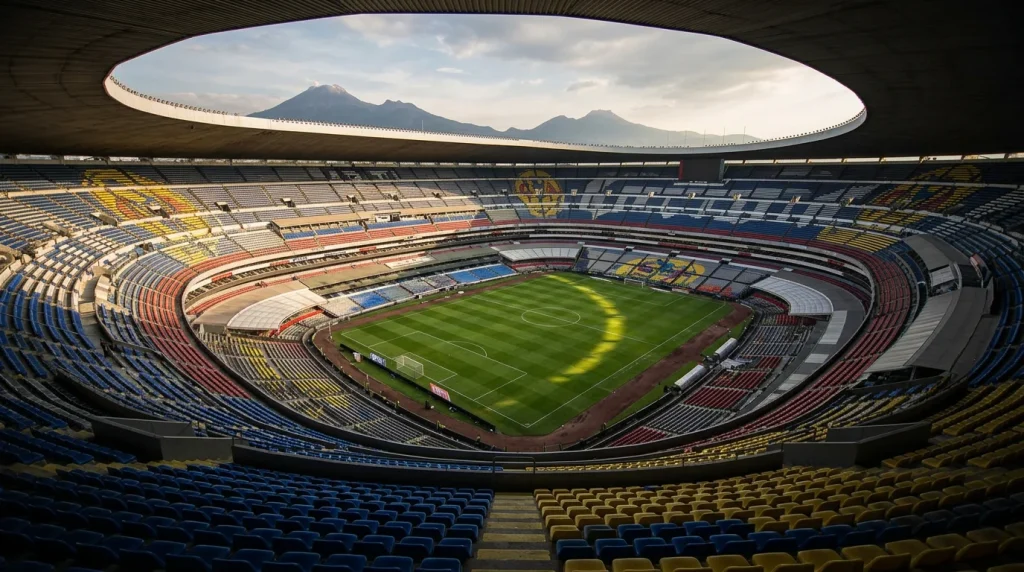
Table of Contents
Maradona’s Hand of God. Pelé’s third World Cup trophy. Carlos Alberto’s iconic final goal in 1970. The Estadio Azteca has witnessed more World Cup history than any other venue on earth, and on June 11, 2026, it adds another chapter as host of the tournament’s opening match. When Mexico faces South Africa in the first fixture of World Cup 2026, they do so in a stadium that understands what these occasions mean — a cathedral of football that has been consecrated through decades of moments that define the sport’s mythology. No other venue carries this weight; no other stadium has earned this honour through such accumulated significance.
The decision to open World Cup 2026 at the Azteca rather than an American mega-stadium reflects FIFA’s respect for footballing heritage. The USA provides commercial scale; Mexico provides spiritual authenticity. The Azteca’s three World Cup hosting duties — 1970, 1986, and now 2026 — make it the first stadium to host matches in three separate tournaments. This history cannot be manufactured through investment or marketing; it exists only through time and the moments that fill stadiums with meaning beyond their architectural specifications.
Estadio Azteca: Football’s Cathedral
Construction began in 1962 and concluded in 1966, creating a venue that held 105,000 at its peak capacity before safety regulations reduced seating to approximately 87,000. The distinctive bowl design carved into the volcanic soil of Mexico City creates atmosphere that newer stadiums struggle to replicate despite superior technology. The pitch sits below ground level, with spectators looking down onto the playing surface in configurations that concentrate crowd energy toward the action rather than dispersing it into open air.
Altitude defines the Azteca’s unique challenge. Mexico City sits 2,240 metres above sea level, creating thin air conditions that affect both ball flight and player endurance. The ball travels faster through less dense atmosphere, creating shooting and crossing variations that sea-level training cannot fully prepare teams for. Players unaccustomed to altitude fatigue faster, particularly in match final thirds when oxygen debt accumulates. The hosts benefit from natural acclimatisation; visiting teams must balance preparation time against schedule constraints.
The stadium has undergone multiple renovations without sacrificing the architectural identity that makes it instantly recognisable. The 2026 tournament demanded further upgrades — improved seating, modernised facilities, enhanced broadcast infrastructure — that bring the 60-year-old venue to contemporary standards while preserving the bowl geometry that creates legendary atmosphere. FIFA’s venue requirements are stringent; the Azteca meets them through thoughtful renovation rather than replacement.
Surrounding the stadium, Mexico City sprawls across valleys and hills in patterns that create chaotic charm unavailable in planned American developments. The neighbourhood of Coyoacán provides match-day gathering opportunities; the broader city offers cultural depth that rewards exploration between fixtures. Getting to the Azteca from various city locations requires patience — Mexico City traffic defies prediction — but the journey becomes part of the experience, anticipation building through slow progress toward football’s most historic venue.
Opening Match: Mexico vs South Africa
The opening match carries symbolic weight beyond sporting significance. Mexico hosting the tournament’s first fixture before home crowds establishes the tournament’s identity from its earliest moment. South Africa’s presence honours the continent that hosted the previous Americas-free World Cup in 2010 while providing competitive opposition that should produce genuine contest rather than ceremonial procession. The fixture promises atmosphere, stakes, and historical resonance that opening matches aspire to but don’t always achieve.
Mexico enters as heavy favourites, with home advantage compounding the quality edge their squad possesses over South African opponents. The El Tri faithful will fill the Azteca with noise levels that visiting teams rarely experience — 87,000 voices unified in support creates pressure that can overwhelm opponents before tactical considerations even register. South Africa’s task involves surviving initial onslaught before finding rhythm that might create upset potential.
For betting purposes, the opening match presents familiar tournament patterns. Hosts historically perform well in opening fixtures, with crowd support and preparation advantages converting to results that justify pre-match favouritism. Mexico’s odds will be short — likely around 1.45 — reflecting near-certainty of victory that limits value potential. The goal markets and first-half betting may offer more interesting angles than match result, where the outcome seems predetermined even if margins remain uncertain.
New Zealand watches the opening match from anticipation mode — our tournament begins five days later in Los Angeles, with Mexico’s result affecting atmosphere rather than Group G mathematics. The opening fixture establishes tournament tone; Mexico’s performance signals whether home-nation advantage translates to North American tournament dynamics as it has historically elsewhere. The result matters less than what it reveals about the 48-team format’s opening phase characteristics.
Azteca’s World Cup Legacy: 1970, 1986, 2026
The 1970 World Cup Final at the Azteca produced what many consider the greatest international football ever played. Brazil’s 4-1 victory over Italy featured Carlos Alberto’s fourth goal — the culmination of a nine-pass team move that ended with the captain driving a shot into the corner — as the defining image of total football perfection. That tournament established the Azteca as World Cup football’s spiritual home, a status reinforced sixteen years later.
Mexico 1986 belongs to Diego Maradona, whose tournament-long brilliance peaked at the Azteca in a quarter-final against England that produced football’s most controversial moment and its most spectacular individual goal within four minutes of each other. The Hand of God punch that put Argentina ahead violated every sporting principle; the second goal, weaving through five England defenders before scoring, demonstrated genius that transcended legality. Both moments occurred on the Azteca pitch, forever linking the stadium to Maradona’s complicated legacy.
The 1986 Final saw Argentina defeat West Germany 3-2 in a match that Maradona dominated without scoring, his assist for Jorge Burruchaga’s winner confirming tournament-long superiority. That match concluded the Azteca’s second World Cup hosting, leaving the stadium with memories that no investment could purchase. The 40-year gap between 1986 and 2026 allows generations to develop without direct memory of the Azteca’s previous World Cup iterations — fresh eyes will witness the stadium’s third tournament chapter.
World Cup 2026 adds to this legacy rather than attempting to replace it. The opening match against South Africa won’t replicate 1970’s artistic perfection or 1986’s controversial brilliance, but it contributes to accumulated history that makes the Azteca unique. Every goal scored here, every match decided, adds to the venue’s story in ways that newer stadiums cannot fast-track. The Azteca earned its status through decades; 2026 extends rather than creates that significance.
All World Cup 2026 Matches at Azteca
The Azteca hosts 10 World Cup fixtures across group stages through the quarter-finals. The allocation honours Mexico’s co-hosting status while acknowledging capacity limitations compared to American mega-venues. Group stage matches bring four different pools to Mexico City, ensuring diverse supporter populations experience the stadium’s legendary atmosphere before knockout rounds concentrate attention on advancing teams.
Group A matches at the Azteca include Mexico’s fixtures against South Korea and the European playoff winner, in addition to the opening match against South Africa. The hosts will play their entire group stage at home — a scheduling decision that maximises Mexican attendance while acknowledging the altitude advantage that would create competitive imbalance if applied across multiple tournament venues. Other Group A matches may occur elsewhere to balance Mexico’s inherent home advantages.
Round of 32 and Round of 16 fixtures bring knockout football to the Azteca, with one quarter-final representing the venue’s deepest tournament involvement. Teams reaching these stages at the Azteca face the altitude challenge that Mexico has navigated throughout their campaign; adjustment time between earlier matches and Azteca fixtures varies based on bracket progression. The venue’s knockout-stage allocation ensures premier matches occur on football’s most historic pitch.
Mexico City for Travelling Fans
Mexico City rewards visitors who approach it with patience and curiosity. The sprawling metropolis — over 21 million people across the greater metropolitan area — offers cultural depth that exceeds most World Cup destinations. Museums, archaeological sites, colonial architecture, and contemporary art scenes compete for attention; the food ranges from street tacos to world-renowned fine dining; the music and nightlife sustain energy that matches the city’s relentless population density.
Accommodation options near the Azteca concentrate in Coyoacán and surrounding colonias that provide local flavour unavailable in sanitised tourist zones. Those preferring international hotel standards find options in Polanco and Roma Norte, upscale neighbourhoods that offer familiar comforts at prices below comparable American city rates. The Mexican peso’s exchange rate creates value for New Zealand dollar holders — approximately 11 MXN per NZD — making Mexico City among the tournament’s most affordable destinations.
Transportation within Mexico City demands flexibility. The metro system covers extensive ground at minimal cost but crowds during peak hours challenge even seasoned urban travellers. Uber operates reliably and affordably throughout the city. Traffic congestion creates journey time variability that requires generous scheduling — the match-day commute to the Azteca can take 20 minutes or 90 minutes depending on factors that defy prediction.
Altitude affects visitors as well as players. Mexico City’s 2,240-metre elevation produces mild symptoms — headaches, fatigue, shortness of breath — that typically resolve within 48 hours of arrival. Those planning Azteca attendance should arrive with adequate acclimatisation time; match-day exertion in thin air without adjustment creates unnecessary discomfort. Hydration and moderate alcohol consumption ease the transition that bodies require at unfamiliar elevation.
Where History Continues
The Estadio Azteca on June 11, 2026 becomes the first page of World Cup 2026’s story. The opening match between Mexico and South Africa establishes tournament narrative before any other fixture occurs — the host nation’s performance, the atmosphere levels, the quality of football produced all set expectations for the month that follows. No pressure beyond what the Azteca has experienced before; this stadium has defined World Cups and will do so again.
For New Zealand supporters, the World Cup groups path doesn’t pass through Mexico City — our matches occur in the United States and Canada, with the Azteca serving as atmospheric reference rather than competitive destination. But watching the opening match provides tournament immersion that our own fixtures build upon. The Azteca’s history becomes part of our World Cup context, the legendary venue’s atmosphere establishing the stakes that every subsequent match inherits.
Football’s cathedral hosts football’s celebration once more. The opening whistle at the Azteca begins a tournament that concludes six weeks later in New Jersey, but the spiritual launch occurs in Mexico City where World Cup memories concentrate more densely than anywhere else on earth. Whatever 2026 produces, the Azteca will absorb those moments into accumulated history that stretches back over half a century — another chapter in the stadium’s endless story.
