
SoFi Stadium Los Angeles: NZ’s World Cup Opener Venue
 Available in US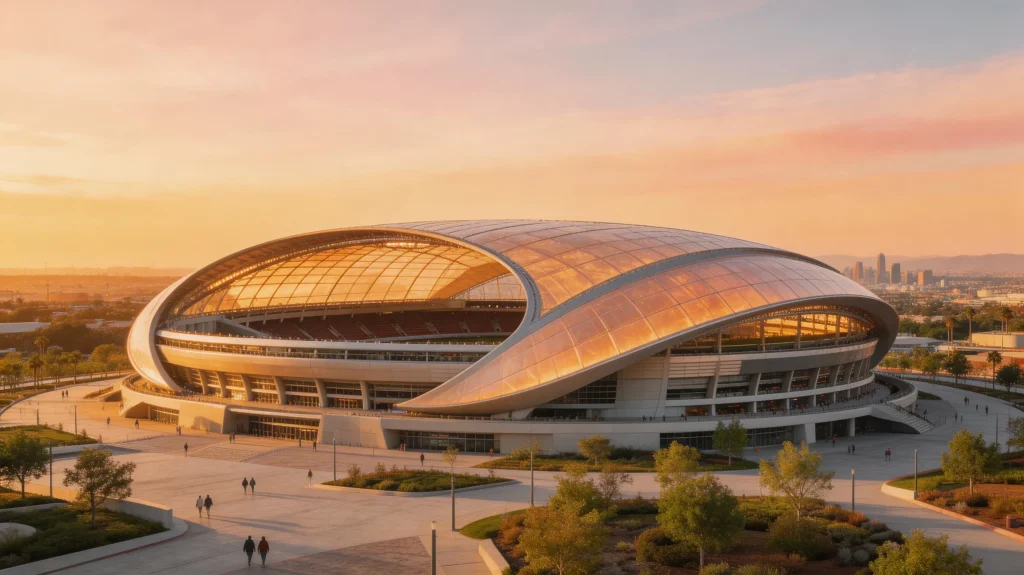
Table of Contents
The most expensive stadium ever built will host the All Whites’ return to World Cup football. SoFi Stadium’s $5.5 billion price tag created a venue that defies traditional stadium design — the curved translucent canopy that floats above the open-air bowl, the 70,000+ capacity that expands for major events, the integrated entertainment district that transforms match days into all-day experiences. On June 16, 2026, New Zealand walks onto this Los Angeles pitch to face Iran in our opening World Cup fixture. Sixteen years of waiting ends beneath Hollywood’s newest monument to sporting excess.
Los Angeles carries historical weight for New Zealand football. The 1984 Olympics saw Kiwi teams compete in LA venues; now the city hosts matches that matter infinitely more to our footballing consciousness. SoFi Stadium sits in Inglewood, minutes from LAX airport, positioned to receive global visitors while serving Southern California’s massive population. The venue represents American football ambition — not soccer, but gridiron — repurposed for the beautiful game in ways that create both opportunities and awkwardness. Understanding SoFi helps prepare for an opening match where venue novelty compounds competitive nerves.
SoFi Stadium: LA’s NFL Palace
Home to both the Los Angeles Rams and Los Angeles Chargers, SoFi Stadium opened in 2020 as the centrepiece of a $5.5 billion entertainment complex that redefined American stadium development. The distinctive canopy — officially a separate structure from the stadium itself — spans 19 acres and contains no steel supports within the stadium bowl, creating unobstructed sightlines that previous covered venues couldn’t achieve. The building earned its cost through technical innovations that position it among the world’s most advanced sporting facilities.
Football configuration at SoFi requires substantial transformation from gridiron layout. The playing surface sits below street level, with spectators descending into the bowl rather than climbing traditional stadium stairs. Natural grass replaces the artificial turf used for NFL matches — FIFA mandates natural surfaces that force SoFi’s operators to install temporary pitches grown off-site and trucked in for World Cup fixtures. This grass-on-concrete arrangement affects ball behaviour in ways players may not anticipate from training sessions.
Capacity for World Cup matches reaches approximately 70,000 after FIFA configuration requirements reduce the stadium’s NFL maximum. The Oculus — a double-sided LED display suspended above the field — provides replay and information displays visible from every seat, though football purists may find its presence intrusive during moments meant for atmospheric immersion. Air conditioning keeps the indoor-outdoor space comfortable despite Southern California’s summer heat, a technological luxury that benefits players and supporters equally.
The surrounding Hollywood Park development includes restaurants, entertainment venues, and the YouTube Theater that hosts concerts and events. Match days at SoFi offer all-day experiences that contrast with traditional football atmosphere — more Las Vegas spectacle than European cathedral. Whether this Americanisation enhances or diminishes World Cup experience depends on perspective; the facilities themselves are undeniably impressive regardless of cultural preferences.
World Cup 2026 Matches at SoFi
SoFi Stadium hosts 13 World Cup matches including knockout rounds through the semi-finals. The allocation reflects Los Angeles’ importance to FIFA’s commercial objectives — the entertainment industry concentration, celebrity culture, and broadcast facilities make LA a tournament hub that extends beyond sporting considerations. Seven group stage matches establish the venue’s World Cup identity before knockout fixtures raise stakes and international attention.
The Group G match between Iran and New Zealand on June 16 represents one of SoFi’s early fixtures, part of the tournament’s opening week where global attention spreads across all 16 venues before consolidating on decisive matches. The June kickoff timing — still early California summer — means manageable temperatures that later July fixtures might not enjoy. Los Angeles’ Middle Eastern diaspora suggests Iranian supporters may significantly outnumber New Zealand’s presence, creating away-match atmosphere despite neutral venue designation.
Later tournament rounds at SoFi include Round of 32 and Round of 16 fixtures, a quarter-final, and one semi-final. The venue’s assignment demonstrates FIFA’s confidence in Los Angeles’ hosting capabilities while ensuring American audiences can attend premium matches without cross-country travel. Should any of Group G’s teams advance deep into knockout rounds, SoFi might host their later fixtures — though predicting bracket outcomes at tournament start remains futile speculation.
All Whites’ Opening Match at SoFi
The Iran versus New Zealand fixture kicks off at 6pm Pacific Time on June 16, translating to 1:00 PM NZST the following day. This timing positions our opener during New Zealand’s lunch hours — workplace productivity across Aotearoa will suffer as screens stream the match that ends sixteen years of World Cup absence. The Monday afternoon timing means pubs and dedicated viewing venues will fill with supporters for whom work obligations become secondary to national footballing significance.
Playing conditions at SoFi suit the match’s tactical expectations. The temporary natural grass favours technical football over physical battles, though installation quality varies and recent pitch concerns at American venues warrant monitoring. Climate control eliminates the weather variables that might favour one side; both teams experience identical conditions that remove any environmental excuse for performance failure. The enclosed atmosphere could amplify crowd noise in ways that benefit whichever supporters achieve numerical superiority.
Iran enters as marginal favourites based on seeding position and recent World Cup experience. Their 2022 campaign included victory over Wales and narrow defeat to eventual runners-up; they understand tournament pressure in ways New Zealand’s squad largely lacks. The opener’s importance cannot be overstated — defeat here places immediate pressure on the Egypt match, while victory establishes platform for advancement that group mathematics strongly favours. SoFi becomes either the site of triumphant beginning or the venue where dreams encountered early difficulty.
For betting purposes, the Iran opener at SoFi presents the tournament’s most interesting New Zealand market. Odds around 3.40 for All Whites victory potentially exceed genuine probability if you believe qualification momentum carries into tournament play. The draw market at approximately 3.20 offers value for those expecting cautious approaches from both sides. SoFi’s opening match atmosphere — unfamiliar venue, early tournament nerves, tactical uncertainty — creates conditions where underdogs historically outperform expectations.
Los Angeles for Kiwi Fans
Los Angeles sprawls across landscapes that defy easy navigation. The car-centric city challenges visitors accustomed to walkable urban cores — distances between attractions require wheels, traffic congests highways at seemingly random intervals, and public transit exists but demands patience Auckland commuters might lack. Those attending the Iran match should allocate travel time generously; arriving late to your first World Cup match in sixteen years would create regret that persists for decades.
Accommodation near SoFi Stadium concentrates in Inglewood and surrounding areas that lack the glamour of Santa Monica or Beverly Hills but offer proximity that eliminates match-day transport stress. The Forum, another historic LA venue adjacent to SoFi’s complex, anchors a neighbourhood transforming through entertainment development. Hotels here serve NFL crowds already; World Cup visitors benefit from established hospitality infrastructure without premium coastal pricing.
Alternative accommodation in more traditionally appealing areas — Venice Beach, Manhattan Beach, Downtown LA — requires transport planning for match day. Uber and Lyft availability fluctuates dramatically around major events; pre-arranged transport or early arrival via rental car prevents the panic of surge pricing and limited availability. LAX proximity means those flying to other World Cup venues can position SoFi matches as day trips from Southern California bases.
Los Angeles offers entertainment beyond World Cup matches that justifies extended stays. The tourism infrastructure — theme parks, beaches, cultural institutions, hiking trails with city views — accommodates diverse interests. Kiwi visitors often find LA’s outdoor opportunities appealing; beach culture that rivals our own, mountain trails accessible from urban areas, and weather that makes outdoor activities reliable rather than hopeful. The city rewards exploration despite requiring more logistical effort than compact European destinations.
Travel Tips: Getting to SoFi from NZ
Multiple airlines operate Auckland-Los Angeles routes, making flight options abundant if booked sufficiently early. Air New Zealand, American Airlines, and several Asian carriers via Pacific hubs compete for trans-Pacific traffic. The 12-hour direct flight arrives in LA during evening hours when Auckland departs in early morning — jet lag management that slightly favours westbound travel compared to the reverse direction. Book months ahead; World Cup demand will strain even LA’s substantial aviation capacity.
Los Angeles International Airport sits mere kilometres from SoFi Stadium, creating the tournament’s shortest airport-to-venue transfer. The People Mover connection to Metro enables public transit journeys to Inglewood, though most visitors will prefer rideshare services that provide door-to-stadium convenience. Allow 30-45 minutes for transport depending on arrival timing; LAX traffic patterns create variability that scheduled transport cannot guarantee.
Rental cars make sense for LA exploration beyond match days but complicate stadium logistics. SoFi’s parking reaches capacity early for major events; the tailgating culture that defines American sports requires advance parking passes that may not be available for World Cup fixtures. Those driving should arrange parking through official channels or plan for remote lots with shuttle services. The stadium’s integration with public transit was designed specifically to reduce automotive dependence — unusual for Los Angeles development.
Match tickets through official FIFA channels remain the only guaranteed-legitimate purchase option. Los Angeles’ entertainment industry produces sophisticated counterfeiting that makes street ticket purchases risky. The FIFA portal offers face-value access with digital delivery that eliminates physical ticket vulnerability. Resale platforms with buyer protection provide alternative access, though premium pricing reflects LA’s expensive entertainment market.
Where Sixteen Years End and Dreams Begin
SoFi Stadium becomes synonymous with New Zealand’s World Cup 2026 regardless of what happens in subsequent matches. The opener against Iran determines immediate narrative — jubilant beginning or early adversity that demands recovery. The $5.5 billion venue provides backdrop for moments that will replay in highlight packages for years, the curved canopy and Oculus display framing footage of whatever history unfolds beneath them.
For supporters making the journey, Los Angeles offers World Cup experience in uniquely American packaging. The spectacle differs from European football culture; the atmosphere carries NFL DNA that football purists might resist. But the All Whites will play there regardless of aesthetic preferences, and the opening whistle at SoFi marks the moment New Zealand football rejoins the global conversation we’ve been excluded from since South Africa 2010. That significance transcends venue criticism.
