
World Cup 2026 Betting Guide: Everything Kiwi Punters Need to Know
 Available in US
Table of Contents
My first World Cup bet was a disaster. Germany 2006, and I backed Australia to beat Italy in the Round of 16 — only to watch Fabio Grosso earn that infamous penalty in the 95th minute. Twenty years later, I’ve learned that World Cup betting isn’t about patriotic punts or gut feelings. It’s about understanding value, reading tournament dynamics, and respecting the unique rhythm of international football.
The FIFA World Cup 2026 presents something unprecedented: 48 teams across three host nations, 104 matches over 39 days, and for us in Aotearoa, our All Whites returning to the global stage for the first time since 2010. This World Cup 2026 betting guide breaks down everything you need to approach the tournament intelligently — from market fundamentals to advanced strategies that separate recreational punters from those who consistently find value.
Whether you’re placing your first ever football wager through TAB NZ or you’ve been following international betting markets for decades, the expanded format creates opportunities and pitfalls that demand fresh thinking. The old assumptions about World Cup betting need updating, and that’s precisely what we’ll do together.
Understanding World Cup Betting Markets
A mate of mine once asked why World Cup odds seem “weird” compared to domestic league betting. He’d noticed that tournament favourites rarely offer the short prices you’d see for Manchester City or Bayern Munich in their respective leagues. The answer reveals something fundamental about international football: uncertainty compounds when players who’ve never shared a pitch suddenly face each other in high-pressure knockout scenarios.
World Cup betting markets divide into three broad categories. Outright markets cover tournament-long outcomes — who lifts the trophy, which team tops their group, who claims the Golden Boot. Match markets focus on individual games, offering standard options like match result (1X2), both teams to score, over/under goals, and Asian handicaps. Player markets drill down to individual performances, from anytime goalscorer to shots on target and even cards received.
The 2026 tournament format reshapes how these markets function. With 48 teams in 12 groups of four, the top two from each group advance alongside the eight best third-placed finishers. That third-place pathway matters enormously for betting purposes. Teams like New Zealand, who might’ve been written off under the old 32-team format, now have realistic advancement scenarios that bookmakers must price accordingly.
Decimal odds dominate the New Zealand market through TAB NZ, and understanding probability conversion is essential. When you see odds of 2.50, divide 1 by that number (1 ÷ 2.50 = 0.40) to get a 40% implied probability. The bookmaker’s margin — their profit built into every market — means the sum of implied probabilities exceeds 100%. For major World Cup matches, this overround typically sits between 105-108%, lower than obscure league fixtures but higher than Premier League headline games.
Liquidity patterns shift dramatically during World Cups. Recreational money floods into outright and match result markets, sometimes creating inefficiencies in more specialist areas. The goal and corner markets for early group stage matches often receive less attention from sharp bettors, meaning odds can drift or shorten erratically based on public perception rather than genuine probability shifts.
Tournament specials deserve particular attention. “Top Asian team” or “Top African team” markets offer alternative routes to backing specific nations without requiring them to outperform the entire field. Given New Zealand sits in Group G alongside Egypt and Iran, the “Top Oceanian team” market becomes a rather straightforward proposition — though be aware that some bookmakers include Australia in AFC markets rather than Oceania following their confederation switch.
The Expanded Format and What It Means for Odds
I remember when FIFA announced the 48-team expansion and my immediate thought was: this changes everything about tournament betting dynamics. Not just because there are more games, but because the entire mathematical structure of probability distribution shifts when you’re dealing with more participants and more pathways to success.
Under the previous 32-team format, qualifying for the knockout rounds required finishing in the top two of a four-team group. The margins were brutal — one poor result could send you home. Now, with third place offering viable advancement for eight teams, the risk calculus fundamentally changes. Sides can afford a cautious approach in their opening fixture, potentially altering tactical setups in ways that affect match betting.
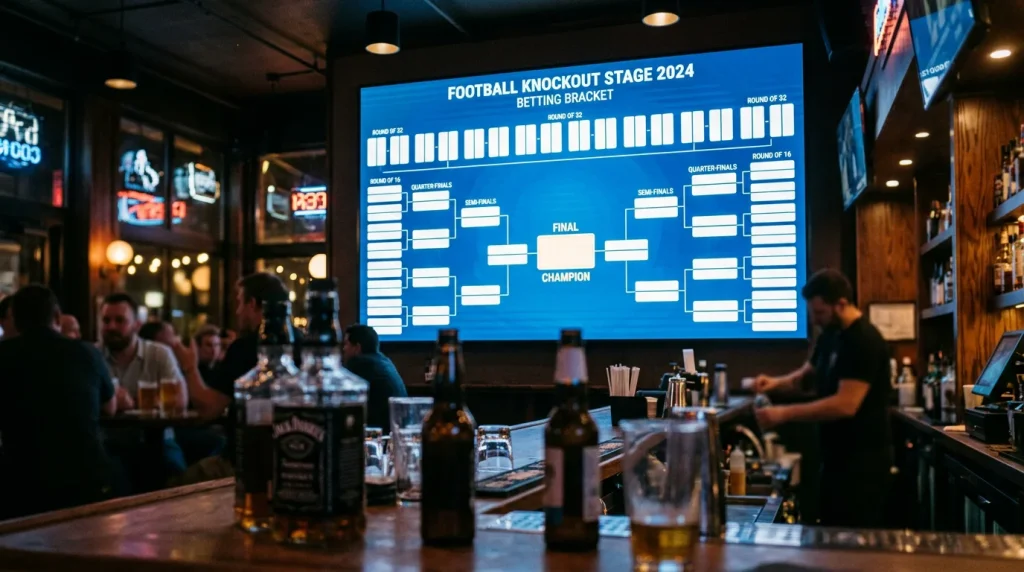
The expanded knockout phase creates 32 teams in the elimination rounds, meaning first-round matches pit group winners against third-placed qualifiers in many instances. Historical data from European Championships, which adopted a similar third-place advancement system, shows that these matchups tend toward predictable results — top seeds usually progress. But the path to the later rounds becomes less certain as the bracket fills with teams who might’ve exited earlier under stricter qualification criteria.
For outright winner markets, the expansion mathematically dilutes each team’s chances. Brazil’s probability of winning drops not because they’ve weakened, but because they face more potential opponents across a longer path. Some bookmakers adjust insufficiently for this dilution, creating value on mid-tier contenders who benefit most from additional opportunities. France at 7.00, for example, represents different value in a 48-team tournament than it would in a 32-team setup.
Group stage betting requires understanding the expanded schedule. Each team plays three matches, but the tournament spans 39 days rather than the previous 32. Rest periods between games increase slightly, potentially benefiting smaller nations who lack the squad depth of traditional powers. This scheduling nuance affects in-play markets particularly — fresh legs in the second half become more likely when teams have had adequate recovery time.
The three-country hosting arrangement introduces travel considerations absent from single-host tournaments. A team based in Vancouver might face a cross-continental journey to Miami, covering over 4,000 kilometres between matches. Betting markets rarely price travel fatigue accurately, especially for group-stage fixtures where bookmakers rely heavily on historical head-to-head data that doesn’t account for modern tournament logistics.
How Legal Betting Works in New Zealand
The Racing Industry Amendment Act 2025 reshaped everything Kiwi punters need to understand about legal sports betting. Before diving into World Cup strategy, you need to know where you can actually place these bets without running afoul of New Zealand law — because the rules are stricter and clearer than many realise.
TAB NZ operates as the sole legal sports betting provider for New Zealand residents. The June 2025 legislation established this monopoly explicitly, making it unlawful for any other operator to accept online sports bets from people located within New Zealand. This prohibition applies extraterritorially — offshore bookmakers marketing to Kiwis violate our domestic law regardless of where their servers sit.
The practical implications are straightforward. If you want to bet on World Cup 2026 legally from Aotearoa, you’re using TAB NZ or their partnership platform Betcha, operated through Entain. The Department of Internal Affairs enforces these regulations with increasing attention to offshore operators targeting our market. While enforcement focuses primarily on operators rather than individual punters, understanding the legal landscape protects you from unlicensed platforms that offer no consumer protections.
TAB NZ offers decimal odds on all major football markets, including comprehensive World Cup coverage. Their platform provides standard outright markets, match betting, goalscorer markets, and selected specials like tournament top scorer and group stage predictions. Betting limits apply, particularly on exotic markets and accumulators, though standard match bets accommodate most recreational wagering volumes.
Responsible gambling protections are mandatory across all licensed New Zealand betting. TAB NZ implements deposit limits, cooling-off periods, and self-exclusion options. These aren’t optional extras — they’re legal requirements reflecting Aotearoa’s approach to gambling harm minimization. The 0800 GAMBLER helpline (0800 426 253) provides support services funded through gambling levies, and acknowledging these resources isn’t just compliance theatre; problem gambling affects real people in our communities.
Advertising for legal operators follows strict guidelines. You’ll see TAB NZ and Betcha promotions during sporting broadcasts, but these must include responsible gambling messaging. Offshore operators cannot legally advertise to the New Zealand market at all — if you’re seeing promotions from unlicensed bookmakers, they’re already demonstrating disregard for our regulatory framework.
Opening an account with TAB NZ requires New Zealand residency verification. The platform accepts standard payment methods including direct bank transfer, Visa, and Mastercard. Withdrawal processing typically completes within 2-3 business days to linked bank accounts. For World Cup betting specifically, major markets open months in advance, allowing punters to secure prices before sharp money adjusts odds closer to tournament kickoff.
Reading Odds and Calculating Value
Years ago, a seasoned punter told me something that stuck: “Finding a winner isn’t the same as finding value.” At first, I thought he was being needlessly philosophical. Then I backed enough short-priced favourites that won but eroded my bankroll, and his point crystallised. Betting profitably requires understanding what odds actually represent — and where they might be wrong.
Decimal odds express the total return on a successful bet, including your original stake. When TAB NZ offers New Zealand at 2.38 to advance from Group G, they’re saying a $10 bet returns $23.80 if successful — your $10 stake plus $13.80 profit. Converting to implied probability: 1 ÷ 2.38 = 42.0%. This means TAB NZ estimates roughly a 42% chance of the All Whites reaching the Round of 32.
Value exists when your assessed probability exceeds the bookmaker’s implied probability. If you believe New Zealand has a 50% chance of advancement based on your analysis of Group G dynamics, then 2.38 represents positive expected value. Even if the bet loses, backing it was mathematically correct if your probability assessment was accurate. This counterintuitive principle separates professional approaches from recreational ones.
The bookmaker’s margin complicates value calculation. TAB NZ doesn’t offer true odds — they build in profit margin across every market. For a binary outcome market (will New Zealand advance or not), true odds would sum to exactly 100% implied probability. Instead, you might see New Zealand at 2.38 (42.0%) and “Not to advance” at 1.57 (63.7%), totaling 105.7%. That extra 5.7% is the overround, or bookmaker’s edge. Identifying value requires beating both your probability estimate and the built-in margin.
World Cup markets exhibit varying overrounds depending on liquidity and public interest. The outright winner market for high-profile tournaments typically carries lower margins — sometimes under 105% — because massive volumes justify thinner edges. Obscure prop bets and player markets might carry overrounds exceeding 110%, meaning you’re starting at significant disadvantage before considering probability accuracy.
Expected value (EV) calculation formalises this analysis. The formula: EV = (Probability of Winning × Profit if Win) – (Probability of Losing × Stake). For the New Zealand advancement example at 2.38 odds with a 50% assessed probability: EV = (0.50 × $13.80) – (0.50 × $10) = $6.90 – $5.00 = +$1.90 per $10 staked. Positive EV indicates a profitable bet in the long run, even though any single wager might lose.
Implied probability from odds assumes the bookmaker has perfect information — which they don’t. Major tournaments attract recreational money that can skew lines based on public perception rather than accurate probability. Popular teams like England or Brazil often trade at shorter odds than their actual chances merit because casual punters back familiar names. Conversely, lower-profile nations might drift to prices exceeding their realistic probability of failure.

Key Betting Markets Explained
The first World Cup bet I ever placed was a match result — Germany to beat Costa Rica in the 2006 opener. Simple, straightforward, and it won. But as I learned the depth of tournament betting, I discovered that match results barely scratch the surface of where value genuinely lies in these markets.
Match result (1X2) remains the most liquid World Cup market. You’re betting on the outcome after 90 minutes plus injury time: home win (1), draw (X), or away win (2). World Cup matches technically don’t have “home” teams, but the first-listed side takes that designation. For New Zealand versus Iran in Los Angeles, New Zealand would be listed first despite playing on neutral ground. Draw odds at World Cups tend to shorten compared to domestic leagues because international teams more frequently settle for points against unfamiliar opponents.
Asian handicap betting eliminates the draw option by applying a goal advantage or deficit to one team. If New Zealand receives a +1.5 Asian handicap against Belgium, they need only avoid losing by two or more goals for your bet to succeed. Half-goal handicaps can’t result in pushes, making them simpler than whole-goal lines. This market suits punters who have opinions on match competitiveness without necessarily predicting outright winners.
Over/under goals markets ask whether the total match goals exceed or fall below a specified line, typically 2.5 for World Cup fixtures. Historical tournament data suggests World Cup group stages average approximately 2.6 goals per match, making the over 2.5 line a near-coinflip proposition. Opening matches often produce fewer goals as teams prioritise not losing, while final group fixtures with qualification implications can see higher-scoring affairs.
Both teams to score (BTTS) has surged in popularity, betting simply on whether each side finds the net regardless of final result. Tournament football, particularly in early rounds, produces “yes” outcomes less frequently than domestic leagues where teams attack more openly. New Zealand’s defensive setup under coach Darren Bazeley likely means BTTS “no” against Belgium offers different value than traditional match betting.
Goalscorer markets cover specific players finding the net. Anytime goalscorer allows your selection to score at any point in 90 minutes; first goalscorer requires them to open the scoring. Chris Wood at 3.20 to score anytime against Iran represents his chance of any goal, while first goalscorer might sit around 8.00 reflecting the additional difficulty. Multiple bet builders combine goalscorer selections with match outcomes for enhanced odds and complexity.
Tournament outright markets extend beyond the winner. “To reach final” removes the requirement of lifting the trophy but still demands a team navigate the entire knockout bracket. “To reach semi-finals” offers midpoint progression bets. Group winner markets focus solely on topping a specific pool, while group betting (which team finishes where) provides granular options without knockout stage uncertainty.
Specials and props range from sensible to exotic. “Fastest goal of the tournament” might appeal if you’ve identified teams who press aggressively from kickoff. “Most cards in a match” targets fixtures between physical sides or those with historical tension. “Top tournament goalscorer by nationality” can offer better value than backing an individual, spreading risk across an entire nation’s forwards.
Tournament Betting Strategy Fundamentals
Back in 2014, I made what I thought was a brilliant move: backing Germany at 8.00 before the tournament, then hedging when they reached the final by backing Argentina. The hedge cost me half my potential profit, and Germany demolished Argentina 1-0. That experience taught me the difference between strategy and nervousness — and why your approach needs establishing before the first whistle blows.
Bankroll management underpins every sustainable betting strategy. The universal recommendation of staking 1-3% per bet on World Cup wagers reflects the tournament’s volatility. With 104 matches across 39 days, even well-researched selections will include losers. A bankroll of $500 suggests $5-15 per bet, allowing 30+ selections before significant drawdown threatens your entire stake.
The staking approach matters as much as the percentage. Flat staking applies identical amounts to every bet regardless of confidence level. Variable staking adjusts amounts based on perceived edge — perhaps 1% for standard plays and 3% for high-conviction spots. Kelly criterion calculations optimise stake sizes mathematically based on edge and odds, though full Kelly often proves too aggressive for real-world application where probability estimates contain error.
Tournament phases demand different approaches. Group stage betting benefits from extensive historical data on team performances and head-to-heads. Knockout stages introduce single-elimination variance where favourites can exit through one poor performance. Your group stage edge might not translate to knockout rounds, requiring strategic adjustment as the tournament progresses.
Early market movement at World Cups follows predictable patterns. Odds open months before kickoff based on bookmaker models, then adjust as sharp money tests those prices. Public money arrives closer to matches, often backing favourites and overs. The optimal entry point depends on which side you’re betting — sharps generally get better prices early on underdogs, while favourites sometimes offer value after public money over-corrects.
Specialisation beats generalisation in tournament betting. Attempting to bet every match guarantees you’ll wager on fixtures where your knowledge provides no edge. Focusing on specific groups, regions, or market types allows deeper analysis. If you’ve followed New Zealand football closely, your Group G insights exceed what bookmakers capture from aggregate data. That informational edge evaporates when betting random African or Asian fixtures.
In-play betting during World Cup matches requires discipline many punters lack. Tournament football produces goals in clusters, emotional momentum swings, and tactical adjustments unfamiliar to domestic league patterns. If you’re betting in-play, predetermine your criteria and limits. Chasing losses during halftime of a group stage fixture leads to impulsive decisions the bookmakers exploit through widened in-play margins.
Group Stage Betting Approaches
My approach to group stage betting changed after the 2018 World Cup when Germany — defending champions — finished bottom of their group behind South Korea, Mexico, and Sweden. If the best team in the world could implode in three matches, then certainty in group outcomes was always an illusion. Working within that uncertainty rather than against it shapes profitable group stage strategies.
Opening match analysis sets the tone. Teams reveal more about their tournament form, fitness levels, and tactical setups in game one than any amount of pre-competition friendlies suggest. Backing underdogs in opening fixtures has historically produced value because favourites often play cautiously, respecting opponents they’ve rarely faced. New Zealand’s opener against Iran fits this pattern — two sides with minimal historical encounters and strong motivation to avoid an early loss.
The expanded third-place pathway fundamentally alters group stage mathematics. Under the old format, 16 of 32 teams (50%) advanced past groups. Now, 32 of 48 teams (67%) reach knockout rounds. This higher advancement probability means fewer desperate final matchday scenarios but more matches with both teams content with a point. Draw prices in group finales between qualified teams often represent value overlooked by bookmakers applying historical tournament data from the 32-team era.
Dead rubber identification presents opportunities and pitfalls. When Belgium has already secured Group G first place heading into their New Zealand match, their motivation diminishes while the All Whites fight for third-place qualification. However, bookmakers anticipate this dynamic and adjust accordingly. The edge comes from assessing exactly how much rotation elite nations actually deploy — some managers rest entire starting elevens, others view every match as preparation for knockout rounds.
Goals markets in group stages require segmentation by matchday. First matchday fixtures historically produce fewer goals (average around 2.3) as teams avoid early elimination scenarios. Second matchdays see this increase slightly (around 2.6) as teams needing results take greater risks. Final matchdays are bifurcated — dead rubbers might see reserved play while must-win scenarios produce open, high-scoring matches.
Same-game parlays and accumulators become tempting during group stages with multiple daily fixtures. The mathematical trap is that combining independently valuable bets reduces your edge while bookmakers maintain their margin on each leg. A four-leg accumulator at combined odds of 10.00 appears attractive, but each leg’s individual overround compounds, meaning you’re fighting significantly worse value than four separate single bets.
Group winner markets offer cleaner value propositions than specific qualification scenarios. Predicting Belgium to win Group G at 1.50 (67% implied) requires assessing only their performance against Egypt, Iran, and New Zealand — not complex tie-breaker scenarios. If you believe Belgium’s squad depth and quality provides an 80% chance of topping the group, that’s clear positive expected value despite the short price.
Knockout Stage Betting Considerations
Knockout football is a different animal entirely. I’ve watched enough penalty shootouts end campaigns for technically superior teams that the randomness feels almost offensive to anyone who believes the best side should always win. But randomness isn’t unpredictable in aggregate — it’s just another factor to price into your analysis.
Single-elimination variance exceeds what match odds imply. When Argentina plays France in a hypothetical quarterfinal, the match result probabilities don’t capture that either side can be eliminated through one penalty miss, one goalkeeping error, or one moment of individual brilliance. The real probability distribution has fat tails — extreme outcomes occur more frequently than odds suggest. This benefits underdog bettors who receive compensation for variance that affects both sides equally.
Extra time and penalties complicate traditional match betting. Standard 90-minute markets exclude additional periods, meaning a 1-1 draw after regulation settles as X regardless of the eventual winner. “To qualify” markets cover the full duration including shootouts, offering cleaner propositions when you’re assessing overall advancement probability. The price difference between “to win in 90 minutes” and “to qualify” reveals bookmaker assessments of draw likelihood and shootout dynamics.
Historical knockout stage data suggests penalty shootout outcomes approach 50-50 randomness despite attempts to identify systematic advantages. German precision, English failures, South American composure — these narratives influence public perception and odds but show minimal predictive validity in statistical analysis. If you’re betting on a team to qualify and the match enters penalties, you’re essentially flipping a weighted coin that bookmakers have already priced.
Progression markets gain importance as brackets solidify. “To reach semi-finals” before knockout rounds begin requires navigating multiple opponents, but once you’re in the quarters, the calculation simplifies to one remaining hurdle. The odds compress accordingly, but sometimes insufficient adjustment creates value on specific matchups where bracket position favours or penalises particular teams.
Fatigue accumulation across knockout rounds affects teams differently based on squad depth and play style. Germany can rotate midfielders throughout knockouts without significant quality drop; New Zealand cannot. Matches going to extra time create compounding exhaustion disadvantages for smaller nations in subsequent rounds. This dynamic rarely receives adequate weight in odds for later knockout fixtures.
Referee appointments for knockout matches become public information before odds finalise. Certain referees have documented tendencies regarding card distribution, penalty decisions, and added time allocation. While betting purely on referee characteristics oversimplifies match dynamics, incorporating this information into your probability assessment refines edge identification in card and foul-related markets.
Researching Teams and Form Analysis
The most common question I receive about World Cup betting is some variant of “how do you actually research teams?” The answer sounds underwhelming until you implement it: systematically, comprehensively, and well before you need the information.
International team assessment differs fundamentally from club analysis. Players spend perhaps 10-15 days annually with their national teammates compared to 200+ days at club level. Form, fitness, and tactical understanding must be extrapolated from limited observations. A player brilliant for his club might underperform for his country due to different tactical systems, chemistry issues, or simply caring less about international duty.
Qualifying campaign analysis provides baseline data despite its limitations. New Zealand’s Oceania qualification path involved opponents like New Caledonia and Fiji — informative about squad depth and fitness but useless for predicting performance against Belgium. European qualifiers faced stiffer opposition, making their qualifying form more relevant to World Cup expectations. Weight qualifying data according to opponent quality and recency.
Friendly matches in the months preceding tournaments reveal manager intentions regarding formation, personnel, and tactics. Teams often trial systems during this period before settling on their tournament approach. However, friendlies involve significant rotation and reduced intensity — extrapolating too confidently from March friendlies to June World Cup fixtures introduces error.
Club form of key players creates a dual picture. Chris Wood’s Premier League season with Nottingham Forest demonstrates his current fitness and goalscoring capability. If he’s carrying a knock or experiencing a goal drought domestically, those concerns transfer to international duty. Conversely, players from leagues with different finishing dates arrive at tournaments with varying rest periods — those whose seasons ended in April may be fresher than those playing into late May.
Squad announcements narrow the field from provisional lists to 23-26 players actually available for selection. Injuries, suspensions, and manager preferences crystallise. A team missing their first-choice left-back might not dramatically shift odds, but systematic assessment of squad quality across all positions informs probability assessment more reliably than focusing only on star players.
Historical World Cup performance carries context-dependent relevance. Belgium’s third-place finish in 2018 demonstrated their quality, but eight years and significant squad turnover later, that specific achievement matters less than current form indicators. Newly qualified nations like New Zealand lack recent tournament data — their 2010 performance (unbeaten in group stage) came from a different era with different players and systems.
Tactical matchup analysis identifies advantages and vulnerabilities. Teams employing high pressing football struggle against opponents comfortable playing through pressure. New Zealand’s likely defensive organisation against Belgium might neutralise Belgian possession dominance if they can limit space for De Bruyne to operate. These matchup dynamics inform both match result and goal total assessments.
Managing Emotions and Expectations
When New Zealand qualified for this World Cup, I felt genuine emotion watching those players celebrate. And therein lies perhaps the biggest challenge for Kiwi punters at this tournament: separating patriotic passion from rational betting assessment.
Betting on your own nation introduces bias that even experienced punters struggle to quantify. The desire to “back the boys” feels aligned with supporting them, but your wager doesn’t affect their performance — it only affects your bankroll. I’ve made this mistake myself, backing the All Whites at inflated prices because wanting them to win distorted my probability assessment. The counter-approach isn’t avoiding New Zealand bets entirely; it’s applying extra scrutiny to ensure your national team selections meet the same value threshold as any other bet.
Loss aversion warps decision-making during tournaments. The pain of a losing bet feels roughly twice as intense as the pleasure from an equivalent win, according to behavioural economics research. This asymmetry leads punters to chase losses with increasingly risky bets, hoping to eliminate negative emotions rather than following predetermined strategy. Setting loss limits before the tournament — both per-day and total — creates boundaries that emotional decision-making cannot override.
The sunk cost fallacy appears when early tournament bets lose. “I’ve already lost $200, might as well try to win it back” ignores that previous losses are irrelevant to future bet quality. Each wager should be evaluated independently. Your $200 loss doesn’t improve or worsen the expected value of betting on Brazil in the quarterfinals — but the desire to recover losses might push you toward selections you’d otherwise avoid.
Confirmation bias affects in-play observations. If you’ve bet on over 2.5 goals, every attack looks dangerous, every defensive lapse seems inevitable to produce a goal. Your perception of match flow distorts to align with your betting position, potentially leading to poor in-play decisions based on skewed assessment. Watching matches without active bets occasionally provides calibration for how your betting position influences your reading of play.
Variance acceptance prevents overreaction to short-term results. A perfectly constructed betting strategy with positive expected value can experience extended losing runs through no fault of the selections. Conversely, profitable early tournament returns might reflect luck rather than skill. Evaluating process quality rather than outcome quality maintains focus on what you can control — the reasoning behind bets — rather than results influenced by randomness.
Social pressure during World Cups intensifies betting emotions. Office pools, family discussions, and constant media coverage create environments where everyone has opinions on matches. Other people’s confidence in their selections can make your analysis feel inadequate, pushing you toward consensus bets that carry negative expected value precisely because public money has already shortened their odds. Betting in isolation — at least regarding decision-making — protects against herd behaviour.
Building Your World Cup Betting Framework
Eight years covering World Cup betting markets taught me that preparation determines outcomes far more than in-tournament reactions. The framework you establish now, before the tournament begins, shapes every decision you’ll make across 39 days of football.
Define your total World Cup bankroll before any bets are placed. This amount represents money you can afford to lose entirely without affecting your daily life, relationships, or financial stability. If that figure is zero, enjoying the tournament as a spectator brings genuine pleasure without the stress of financial exposure. Betting should enhance entertainment, not create anxiety that detracts from appreciating the football.
Establish market focus based on knowledge and comfort. Attempting to bet every market dilutes your edge while increasing complexity. Perhaps you’re confident in match result betting but lack the knowledge for accurate goalscorer assessment. Maybe group stage dynamics make sense, but knockout variance unsettles you. Specialising within your competence zone produces better results than chasing opportunities across unfamiliar territories.
Create recording systems for tracking bets. Simple spreadsheets capturing selection, odds, stake, reasoning, and outcome enable post-tournament review that improves future performance. Without records, memory biases toward remembering winners and forgetting losers, preventing honest assessment of what worked and what didn’t. The discipline of recording also slows impulsive betting — knowing you must justify each selection in writing encourages more careful analysis.
Schedule betting windows rather than allowing continuous engagement. The World Cup offers multiple daily fixtures, creating endless opportunities to wager. Predetermined windows — perhaps reviewing the following day’s matches each evening — contain betting activity within structured periods. Outside these windows, enjoying matches purely as a fan provides balance the tournament demands.
Plan for the likely scenario of early losses. Even well-researched group stage bets will include losers. The question isn’t whether you’ll experience drawdown, but how you’ll respond when it occurs. Predetermined rules like “no additional deposits regardless of results” or “reduce stake size by 50% after 30% bankroll loss” create automatic responses that remove emotional decision-making during difficult stretches.
Identify information sources worth your attention. Quality international football analysis is scarcer than Premier League coverage. New Zealand-specific insights come from domestic sources like TVNZ, Stuff, and dedicated football journalists who follow the All Whites closely. Global perspectives require filtering out click-driven content from genuine tactical analysis. Building your source list now means trusted information flows during the tournament when time for research compresses.
Accept that entertainment value sometimes exceeds betting value. Placing a small wager on New Zealand to beat Belgium might be negative expected value while still being worthwhile for the engagement it creates. Separating your serious betting allocation from “fun money” for speculative or emotionally meaningful bets allows both pursuits without conflating their purposes. Just ensure fun bets stay within their allocated portion rather than consuming your edge-focused bankroll.
From Analysis to Action
World Cup 2026 arrives with unique circumstances that won’t recur. The first 48-team tournament, the All Whites’ return after 16 years of absence, a three-nation hosting arrangement spanning different time zones and climates. These novelties create uncertainty bookmakers struggle to price — which is precisely where attentive punters find opportunity.
The framework in this World Cup 2026 betting guide isn’t about finding sure things. Certainty doesn’t exist in tournament football, and anyone selling guaranteed winners is selling fantasy. Instead, systematic approach to bankroll management, value identification, and market selection improves your probability of positive outcomes over 104 matches while making the journey engaging regardless of results.
For New Zealand punters specifically, this tournament carries emotional weight beyond typical sporting events. The All Whites representing Aotearoa on the global stage, with matches at accessible viewing times and genuine advancement possibilities through the third-place pathway, creates once-in-a-generation football engagement. How you choose to interact with betting markets during these 39 days is entirely personal — but doing so with eyes open to both opportunities and risks honors the preparation this guide has outlined.
The opening match in Mexico City is June 11, 2026. Between now and then, odds will shift, squads will change, and analysis will sharpen. Use that time well. Your framework today determines your experience tomorrow.
