
Egypt at World Cup 2026: Salah Leads the Pharaohs
 Available in US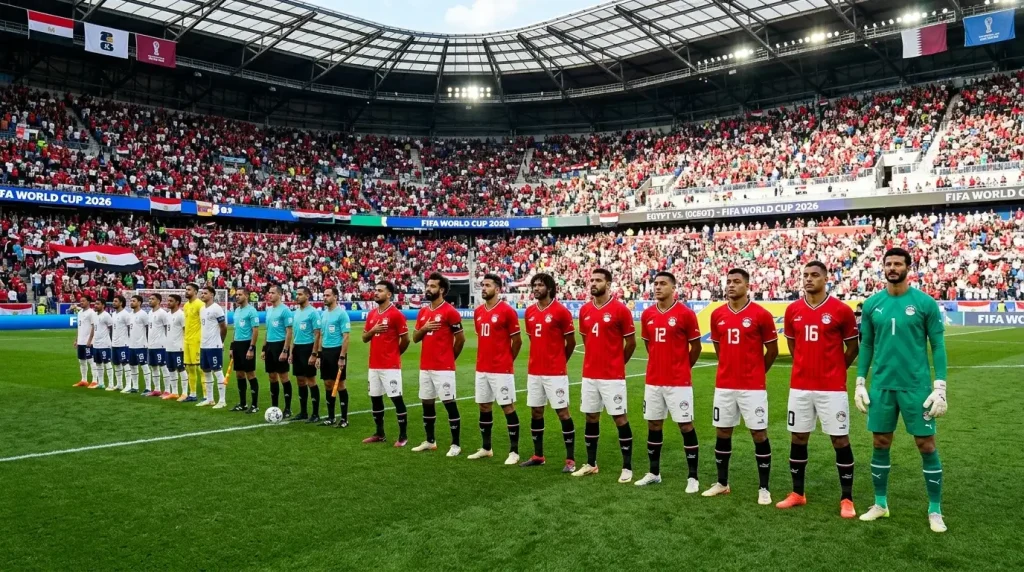
Table of Contents
Mohamed Salah turns 34 a week before Egypt’s World Cup 2026 opener. That single fact shapes everything about how the Pharaohs approach this tournament — and everything about how Kiwi punters should evaluate their Group G opponents. Egypt at World Cup 2026 is essentially Salah’s farewell tour on football’s grandest stage, a final opportunity for one of his generation’s finest attackers to leave an indelible mark on the tournament he has dreamed about since childhood. The Pharaohs build everything around their talisman, which creates both opportunity and vulnerability in equal measure.
Egypt qualified for their first World Cup since 2018 through a CAF campaign that showcased both their strengths and limitations. They possess Salah, which automatically places them above most African nations in terms of individual quality. They also remain defensively organised under coach Rui Vitória, difficult to break down when committed to protecting leads. What they lack is depth and secondary creative options when Salah’s influence gets nullified. For New Zealand, facing Egypt represents perhaps the most pivotal match of the group stage — the fixture where realistic hopes of advancement could materialise or evaporate entirely.
Egypt’s Path: CAF Qualification
The Egyptian federation sacked Rui Vitória twice during qualification before rehiring him twice. That chaotic backdrop tells you much about the pressure surrounding this national team and the expectations Salah’s presence generates domestically. Egypt eventually qualified as group winners in CAF’s competitive structure, accumulating 14 points from six matches while conceding just three goals. Their defensive record demonstrated what Vitória builds his teams around — organisation, discipline, and reliance on moments of individual brilliance to win matches.
Salah contributed seven goals across qualification, accounting for over half of Egypt’s total output. That dependency worries analytical observers while simultaneously confirming what everyone knows: when Salah performs, Egypt compete with anyone in African football. His hat-trick against Mauritania secured qualification mathematically, a performance that reminded fans and punters alike why this man has topped Premier League scoring charts multiple times. Without Salah, Egypt struggle to create consistent chances against organised defences.
The CAF qualification pathway exposed Egypt’s secondary issues. Omar Marmoush emerged as the only other consistent attacking threat, contributing three goals and four assists while establishing himself at Eintracht Frankfurt. Beyond Marmoush and Salah, Egypt’s creativity drops significantly. Mostafa Mohamed offers physical presence but limited technical contribution. The midfield workhorses protect more than they progress. This reliance on two players scoring or creating everything presents obvious tactical targets for Group G opponents.
Egypt’s defensive record merits attention from punters examining under/over markets. They conceded 0.5 goals per match during qualification, kept four clean sheets in six games, and rarely allowed opponents sustained periods of pressure. Vitória organises his backline meticulously, with Mohamed El-Shenawy providing experienced goalkeeping behind a disciplined back four. Teams need to earn chances against Egypt rather than expecting defensive gifts.
Salah, Marmoush, and Egypt’s Stars
Mohamed Salah requires no introduction to anyone following football over the past decade. His Premier League record speaks volumes — over 150 goals for Liverpool, multiple Golden Boot awards, and recognition among the finest attackers modern English football has witnessed. At 34, Salah’s pace has diminished slightly from his absolute peak, but his movement, finishing, and ability to influence matches remains elite. He scored 23 league goals in 2025-26, demonstrating that age has not yet caught him.
What makes Salah particularly dangerous at international tournaments is his willingness to shoulder responsibility entirely. Lesser players shrink under expectation; Salah expands into it. He wants the ball in decisive moments, demands possession when matches hang in balance, and backs himself to produce magic when teammates cannot. This mentality creates problems for opponents who must dedicate significant tactical attention to one player while still monitoring ten others.
Omar Marmoush has transformed from promising youngster into genuine European-quality attacker. His 18 Bundesliga goals in 2025-26 established him as one of Germany’s most dangerous forwards, and he brings that confidence into international duty. Marmoush operates on the left wing for Egypt, cutting inside onto his favoured right foot in similar fashion to Salah’s movements from the opposite flank. This creates a dual threat of inverted wingers who both shoot with confidence and combine intelligently.
The supporting cast features competent rather than exceptional performers. Ahmed Hegazi marshals the defence with experience accumulated across English and Saudi football. Mohamed Elneny provides midfield security through positioning and work rate rather than creative inspiration. Mahmoud Hassan Trezeguet offers utility across attacking positions without threatening to dominate matches. Egypt’s bench contains capable replacements but nothing approaching the impact their starting attackers provide.
Goalkeeper Mohamed El-Shenawy deserves recognition as one of Africa’s premier shot-stoppers. His reflexes and command of the penalty area give Egypt confidence when protecting narrow leads, and he has saved penalties in crucial qualifying matches throughout his career. El-Shenawy’s World Cup 2018 performance against Russia demonstrated his ability to keep Egypt competitive against superior opponents through sheer individual brilliance in goal.
Group G Analysis: Egypt’s Chances
Egypt enter Group G as second favourites behind Belgium, with bookmakers pricing their qualification chances around 1.70 and group victory available near 5.00. These odds reflect realistic assessment — Egypt should beat New Zealand and can compete with Iran, but Belgium represent a level above their current capabilities. The path to knockout rounds runs through accumulating points against the lower-seeded opponents while avoiding embarrassment against Belgian firepower.
The fixture sequence works somewhat against Egypt. They open against Belgium in Atlanta on June 14, meaning their toughest match comes before they can settle into tournament rhythm. Losing that opener would create immediate pressure on the Iran and New Zealand fixtures. Egypt’s 2018 World Cup saw them fall behind immediately and never recover psychologically — avoiding that pattern matters enormously.
Iran represents a fascinating tactical battle. Both teams prefer defensive organisation and counterattacking football, potentially producing a cautious affair where neither wants to commit forward excessively. Matches between similarly minded opponents often produce low-scoring results decided by set pieces or individual errors. Egypt’s quality in those decisive moments should edge them ahead, but nothing comes guaranteed against experienced Iranian campaigners.
New Zealand looms as Egypt’s most winnable fixture. Salah against All Whites defenders presents a mismatch that Vitória will exploit repeatedly. Egypt should dominate possession and territory, requiring them to convert chances rather than simply create them. The Pharaohs’ historical struggles with clinical finishing against defensive opponents could resurface if New Zealand defend intelligently and deny space behind their backline.
For Egypt to top the group, they likely need a result against Belgium combined with comfortable victories elsewhere. The mathematics demand six or seven points for group winners, meaning even a draw against Belgium only helps if Egypt then beat both Iran and New Zealand convincingly. More realistic expectations target second place and advancement to the knockout rounds, where anything becomes possible in single-elimination football.
Egypt Betting Odds and Value Markets
Egypt’s outright odds of approximately 100.00 to win the World Cup reflect their realistic ceiling accurately. They are not winning the tournament. Punters should dismiss any notions of backing Egypt for glory and focus instead on group stage and individual markets where value actually exists.
Egypt to qualify for knockout rounds at around 1.70 offers reasonable value if you believe they handle New Zealand and Iran adequately. The implied probability suggests bookmakers give Egypt roughly 59% chance of advancing, which aligns with sensible assessment of their squad quality relative to group opponents. Some punters might find value in Egypt to finish second behind Belgium at higher odds.
Mohamed Salah’s individual markets present interesting opportunities. His Golden Boot odds around 25.00 acknowledge both his quality and Egypt’s likely early exit — to win the top scorer award, Egypt would need to advance deep into the tournament while Salah finds the net repeatedly. More achievable targets include Salah to score in specific matches, where his odds against New Zealand might actually undervalue his genuine probability of finding the net against limited opposition.
Under/over markets suit Egypt’s profile. Their matches tend toward lower totals given Vitória’s defensive organisation. Egypt to keep a clean sheet against New Zealand prices attractively for those who believe the All Whites lack firepower to threaten El-Shenawy consistently. Conversely, Egypt’s struggles creating secondary chances mean both teams to score could hit if New Zealand defend resolutely and snatch a set-piece goal.
Asian handicap betting offers sophistication for those understanding the market. Egypt -1.5 against New Zealand assumes comfortable victory, while -1 provides insurance if the Pharaohs win narrowly. The spread matters because Egypt’s matches often finish with minimal margin rather than dominant scorelines — they win 1-0 or 2-0 more frequently than 3-0 or 4-0.
Egypt vs All Whites: The Crucial Match
New Zealand faces Egypt in Vancouver on June 21 in what I believe represents the most important match of the All Whites’ entire World Cup campaign. Beat or draw with Egypt, and realistic knockout round hopes exist. Lose, and mathematical elimination becomes highly probable before the Belgium match even kicks off. The stakes could not be higher for New Zealand football.
Egypt will target this fixture with similar desperation. After potentially losing to Belgium in their opener, the Pharaohs cannot afford dropped points against the group’s lowest-ranked team. Expect Egypt to attack with purpose from the first whistle, committing numbers forward in ways they would not consider against Belgium or Iran. This aggression creates counterattacking opportunities for New Zealand but also increases the probability of conceding against Salah’s movement.
Chris Wood against Egypt’s centre-backs represents New Zealand’s primary threat. Hegazi and his defensive partners have faced elite strikers throughout their careers but have also shown vulnerability against physical forwards who occupy them constantly. Wood’s Premier League experience means he understands how to exploit defensive lapses, and a single clinical finish could transform the match entirely.
For Kiwi punters, Egypt vs New Zealand demands careful consideration rather than reflexive backing of the supposed underdogs. Egypt should win this match — their squad quality, Salah’s presence, and competitive necessity all point toward Egyptian victory. Finding value means identifying specific scenarios where New Zealand outperforms expectations: the draw, New Zealand scoring regardless of result, or correct score predictions reflecting tight margins.
The venue matters psychologically. Vancouver’s large New Zealand diaspora will create atmosphere resembling a home fixture for the All Whites, neutralising some of Egypt’s competitive advantage. Crowd support alone does not win football matches, but it affects players’ confidence and decision-making in marginal moments. Egypt have struggled historically in hostile environments — their 2018 World Cup defeats came partly through psychological collapse after conceding first.
Pharaohs’ Tournament Outlook
Egypt will likely reach the knockout rounds and exit within the first two elimination matches. This assessment is not pessimism but recognition of where the Pharaohs stand in global football’s hierarchy. They possess one world-class player surrounded by competent professionals, which enables advancement past group stages but limits progression against superior nations deploying eleven quality performers.
Salah’s legacy at international level depends partly on what happens in North America. He has never scored at a World Cup, with Egypt’s 2018 campaign concluding without him finding the net due to injury concerns affecting his first two matches. Redemption awaits if Salah can lead the Pharaohs to knockout rounds while contributing goals and assists that match his club-level dominance. Football romantics hoping for Salah magic should have plenty to enjoy even if Egypt’s tournament ultimately ends in disappointment.
For New Zealand supporters and punters, Egypt demand respect without inspiring fear. The Pharaohs are beatable over 90 minutes through defensive discipline, set-piece threat, and capitalising on the nervousness that accompanies must-win scenarios. Egypt vs All Whites might be the match where World Cup 2026 dreams either crystallise or crumble. Plan your bets accordingly.
